Gabby Petito disappeared on August 27th 2021, and was found dead the following month. She had been murdered by her fiancé on a road trip. At the time, the frenzy around the disappearance was rapidly enveloping online culture. Stewing in the background was the ongoing COVID pandemic that caused many young people to retreat into online communities, with the True Crime genre being a big winner. I’m not going to preach about the moral ambiguity of True Crime as entertainment, I watch far too many episodes of Air Crash Investigation to have any rocks to throw here. Because this was a growing community, it ran into the issue that all larger communities have – a yearning for participation. Like when people chirp at NBA players from the sidelines, or start wearing cowboy hats after seeing season one of Yellowstone. We’re not good audiences, we want things to be interactive.
The transition from hearing about closed cases to trying to investigate open ones is one we should’ve seen coming. When I saw the true crime crowd ‘investigating’ this case, it gave me an unplaceable eerie feeling. It was genuinely impressive to see them gather the public evidence piece by piece – but rather than determining that more was needed, many surmised it could be her fiancé. Thousands of users drawing connections between tidbits, egging one another along, building the momentum of that theory. And then, at a certain point, a leap was made. A speculative theory became self-evidently true. He’d done it, clearly. There was not conclusive evidence to this effect but many filled in the gaps with his demeanor, his vibe. This would not be the last time.
In November 2022 a grisly quadruple murder shook Moscow, Idaho. Four students brutally murdered, their killer arrested in late December that year. This did not present a barrier to Ashley Guillard, the host of the Ashley Solves Mysteries TikTok account. Guillard determined that, like many previous true crime cases, a conspiracy was afoot. She made dozens of videos accusing an unrelated history professor Rebecca Scofield of having a relationship with one of the victims and arranging the murder to cover it up. Even at her civil trial, Guillard was defiant: “It is reasonable in my shoes that I believe Scofield to be a part of these murders,” Guillard said. The jury disagreed, awarding Scofield $10 Million in damages.
Gabby Petito’s fiancé was responsible, the true crime crowd got it right. But their method more resembles a broken clock than CSI. Guillard is an extreme example of a tendency in the true crime community to leap from suspicion to fact. In Petito’s case, they were vindicated in this. That doesn’t make the method sound, and the next accused person with a bad vibe could well be innocent. When outcomes don’t reflect the merit of who we trust, we have to dig deeper.
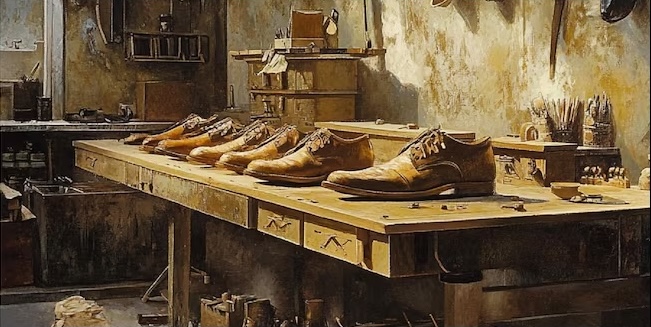
Credibility is currency. When you decide someone is worth trusting, you’ve provided them immense power over you. The most common way of abusing this is when an authority on one subject tries to advise on a subject they have no authority on, such as the effective true crime storytellers speculating on active investigations. The unfortunately obtuse term for this is ultracrepidarianism, or, literally: beyond the shoe. It comes from the idea of a cobbler trying to paint, something they wouldn’t have any expertise in.

The cobbler is enabled by audiences seeking to outsource their own rigor. Michael Burry famously predicted (and bet against) the housing crisis of 2008, an extremely impressive feat that earned him considerable credibility as an investor. He was able to take advantage of misplaced faith in mortgage securities to execute one of the most stunning trades of all time. That credibility was further emphasized via a Michael Lewis book and subsequent film The Big Short. In the film, Michael Burry’s character says “people want an authority to tell them how to value things, but they choose this authority not based on facts or results. They choose it because it seems authoritative and familiar.” The irony here is that Burry is an example of exactly this fallacy. He was right about a specific mortgage credit crash, and that credibility has followed him into further speculation across the entirety of the stock market. The casual investing audience, invested in the myth of Burry as a general market visionary and in some cases wanting it to be true, eats it up. A steady stream of coverage every year about each prediction he’s made, and the result is below. Burry has become the cobbler.

I recently stumbled across Sarah C. M. Paine via her Youtube history lectures. Before I knew anything of Sarah’s long resume I could tell she was more reliable than most. Part of this was simply listening to 2 hours at a time of her diving to topics like the Russo-Japanese war and actually making them engaging, but the rest was what happened after. The lectures I saw were hosted by an interviewer named Dwarkesh Patel. Dwarkesh is a solid interviewer broadly, but he’s more focused on technology discussions than history. It shows. At the end of each lecture in the series, he’d ask questions, many of them out of her purview.
Sarah Paine graduated from Harvard magna cum laude, has her Master of International Affairs and PhD from Columbia, she’s a Professor at the Naval War College. She could take a better guess than most with these questions, and sound polished doing so. She doesn’t, instead making it clear that she hasn’t studied a certain area before offering any speculation or analysis. Dozens of “I don’t know’s” over the series, and a brilliant display of staying in her own lane of expertise. She knows the allure of just a little commentary outside your field, and the risk of those small overreaches compounding. Sarah is a great shepherd to the listener, and man do I need it. Thankfully for me, there are others.
I find that the more intellectualized the topic, the higher the risk that my eyes glaze over and I just revert to agreeing with whoever sounds good enough. Tax codes, wine lingo, sports analysis, whatever we’re calling the mountain of diet advice swirling around – sure, yeah, yeah, I’ll just take your word for it. This is a risky gambit. Topics that don’t seem to matter initially have a habit of suddenly becoming important, ask anyone who parroted a bad wine recommendation to their boss. It’s hard to imagine a better case of this than language usage, a world that defines how we communicate and where there really isn’t an authority to verify if every claim is correct.
Usage comes down to: how do we determine the rules of how to write language ‘correctly’? What are those rules? It’s partly authority, partly consensus, and partly inertia, and nobody fully controls it. At the highest levels, the camps at play are the prescriptivists, who feel it’s their role to prescribe what’s correct, and the descriptivists, who feel their role is to describe how language is used. These aren’t binary positions but more of a spectrum of belief, and a messy spectrum at that. Even writing this my brain wants to jump ship to just about any other topic, but the standards of language are the foundations of most of our communication. If these aren’t good, you risk your audience not knowing what you’re trying to say, or assuming you made a mistake when their rules and yours don’t align.
David Foster Wallace wrote an essay called ‘Authority in American Usage’ where he summarizes the recent history2 of academics attempting to codify the usage of language. At one point, D.F.W. quotes a Webster dictionary introduction:
“A dictionary can be an ‘authority’ only in the sense in which a book of chemistry or of physics or of botany can be an ‘authority’: by the accuracy and the completeness of its record of the observed facts of the field examined, in accord with the latest principles and techniques of the particular science.”
I read it and think: okay, this makes sense, dictionaries record facts. Then D.F.W. eviscerates it so completely it almost feels like a waste of my earthly existence to have read it. He calls it so stupid it ‘practically drools.’ He walks through what that standard would mean in practice: every popular whackadoo theory would have to be included in every textbook. He emphasizes that expertise isn’t just collecting facts, it’s knowing how to interpret them. He later refers to the whole thing as a barrel of drugged trout. The stinging pain to my ego is well worth actually understanding useful ways of thinking about this. He goes on to break down the major theories, eventually diving into Bryan A. Garner’s stab at usage – Garner’s Modern English Usage – and concluding that it’s a massive achievement:
“The book’s spirit marries rigor and humility in such a way as to let Garner be extremely prescriptive without any appearance of evangelism or elitist put-down. This is an extraordinary accomplishment.”
This is exactly how I feel about D.F.W. as a shepherd himself. He makes hard and relevant points, but also doesn’t hide his ignorance in areas outside his expertise. I can imagine him reading dictionary intros and counter-essays, qualifying, disqualifying, making decisions about how he’s going to explain all of it. Even his footnote digressions show off all the eclectic parallel knowledge informing his work. It’s at this point where I most risk just deferring to general authority. If D.F.W. mentioned a thought about carburetors in an interview, I’d be inclined to believe it. But D.F.W. hasn’t earned that. Credibility is a two-way street. The presenter has to earn their authority through diligence, but the audience has to recognize where that authority begins and ends. What we need when diving into our ignorance is someone who truly knows their shit, their limits, and can explain all of it – but we need to bring the diligence to understand where they’ve earned our trust.
I’ve written before about how we all have to make assumptions and how messy of a business that can be, even in the best of circumstances. In navigating that, it helps to know the game you’re playing, and know what you’re good at. Being right is a seductive red flag, all it takes is some good fortune to make a gambler of your assumptions. More important still is discerning who around you has really earned the right to advise you on how to play. The temptation to align yourself with the person who feels familiar will be palpable, worse if they’ve won a few hands. But telling stories and solving murders are not the same game. Nor are predicting a housing market crash and being Nostradamus Warren Buffett.
We can’t audit everything, you will at some point have to trust someone to shepherd you. Trust people who can show you how they know what they know, and are honest about what they don’t. The method shouldn’t be madness, it should be rigorous.
Colin
- I wasn’t able to verify the first two on here, and some of the others are more specific bearish positions rather than something that can reasonably be construed as a whole market position. Still – he’s made broad predictions that just haven’t come to pass, most dramatically when he tweeted a simple “SELL” in 2023. Also, I know his name is spelled wrong on this. ↩︎
- As of 1994. ↩︎
Sources
Blanchard, Nicole, and Kevin Fixler. “Tarot TikToker Must Pay $10M to Professor She Accused in Moscow Murders, Jury Says.” Idaho Statesman, 27 Feb. 2026, www.idahostatesman.com/news/northwest/idaho/article314859753.html.
Garner, Bryan A. Garner’s Modern English Usage. 5th ed., Oxford UP, 2022.
Hong, Monta. “The Big Short Michael Burry: Track Record—Short-term Hit, Long-term Miss.” moomoo Community, 14 Nov. 2025, www.moomoo.com/community/feed/the-big-short-michael-burry-track-record-short-term-hit-115547625422854.
Levitt, Barry. “What Netflix’s American Murder: Gabby Petito Reveals About the Final Days of Her Life.” TIME, 17 Feb. 2025, time.com/7252972/american-murder-gabby-petito-true-story-netflix/.
Paine, Sarah. “How Imperial Japan Defeated Tsarist Russia & Qing China.” Interview by Dwarkesh Patel, YouTube, uploaded by Dwarkesh Patel, 25 July 2025, youtu.be/KxIeJjEGLdo.
Wallace, David Foster. “Authority and American Usage.” Consider the Lobster and Other Essays, Little, Brown, 2005.
Le savetier [The Cobbler]. 18th century, engraving, artist unknown. Bibliothèque nationale de France, Paris.
Leave a Reply